Every year the Nebraska Water Center provides grant funding for research through the U.S. Geological Survey 104b program. The 104b program supports early-career faculty conducting research in Nebraska, to address important water challenges within and outside of Nebraska.
In 2025, $75,418 was awarded to three research projects. These projects not only advance scientific understanding, they also provide hands-on training opportunities for students and support impactful research across the University of Nebraska.
Awards were granted to the three following projects:
Examining River Evolution: A Historical Analysis of Riparian Vegetation and Channel Morphology of the Platte River, Nebraska. PI Mark Stone, co-PI: Aaron Mittelstet. $28,982
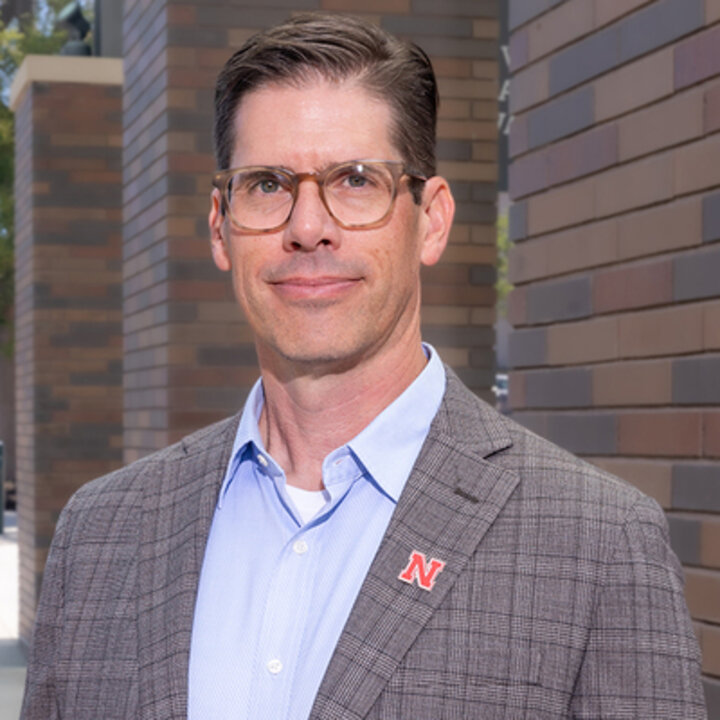
The Platte River is one of Nebraska’s most important waterways. The river supports both agriculture and industry, provides drinking water to communities across Nebraska, and sustains critical wildlife habitat for species. Over time dam construction, groundwater withdrawals, and upstream diversions have changed the river’s flow and shape. Sections of the Platte have narrowed and become vegetated, which is decreasing habitat for endangered species and changing the river’s flood dynamics. This project will examine how the river’s channel and riparian vegetation have changed from 1984 to 2025 using Landsat satellite imagery. Combining satellite data with temperature, precipitation, and streamflow records, will allow the research team to identify trends in vegetation and channel movement. The findings will help inform adaptive river management and restoration strategies, for a more sustainable future.
Mark Stone is currently a Professor in the Department of Biological Systems Engineering. Stone has an emphasis area on Sustainable Engineering Systems and his areas of interest/research include: ecohydrology and river system management, natural hazards resilience, hydrologic and hydraulic modeling, convergence science and transdisciplinary collaboration, and remote sensing and machine learning applications in water resources.
Snow Drought in the Missouri River Basin and Its Hydrological Implications. PI Liang Chen. $27,936

Snowfall is an important factor in the hydrology of the Missouri River Basin. In recent decades, “snow drought” has become more common, which are periods of abnormally low winter snow accumulation. The frequency, severity, and downstream impacts of snow drought in the Missouri River Basin aren’t fully understood yet. This project will develop a 40-year climatology of snow drought across the basin, identifying patterns in frequency, duration, and intensity. Using high-resolution observational and modeling datasets, the study will also examine how winter snow drought influences soil moisture and hydrologic drought conditions in the spring and summer. Finding the connections between winter snowpack deficits and soil moisture, will allow the research team to improve understanding of drought risk and water resource management in the basin. The findings will be used to receive further grant funding.
Liang Chen is currently an Assistant Professor in the Department of Earth and Atmospheric Sciences with expertise in: land-atmosphere interactions, extreme events, impacts of climate change, climate modeling, land use and land cover change, and remote sensing.
Impact of Wetlands on Improving Water Quality in Pecan Creek and Deadman’s Run. PI Jean Niwenshuti, co-PIs Derek Heeren and Aaron Mittelstet. $18,500

With the City of Lincoln and the Lower Platte South Natural Resources District, this project addresses flooding and water quality concerns in Deadman’s Run, where more than 500 homes and businesses are currently located within the floodplain. Planned mitigation efforts include two retention ponds, one located on UNL’s East Campus, and four on wetlands along the tributary. The research team plans to develop a hydrologic model (HEC-HMS) to simulate storm events and assess peak flows. Water samples collected upstream and downstream of the wetlands will be analyzed for nutrients, sediment, bacteria (including E. coli), and other indicators of water quality. Laboratory analyses will be conducted at UNL’s Water Sciences Laboratory and Ecological Engineering Lab. This study will help estimate how effectively constructed wetlands can reduce pollution and mitigate flood risk. The team plans to attain more federal funding to continue monitoring after construction is finished to ensure long term environmental benefits for Lincoln.
Jean Niwenshuti is currently a graduate student in the School of Natural Resources, pursuing a doctorate degree in “Philosophy in Natural Resource Sciences”, with expertise in: computer vision, precision system management and computational modeling.

